
RED LIGHT THERAPY
IN ANN ARBOR, MI
Support your health at the cellular level with clinically proven red light therapy.
You’ve probably noticed red light masks are having a real moment on social media recently. But red light therapy is much more than a trend! Integrative health practitioners have been offering red light therapy for years because the science is real.
Whether you're dealing with stubborn inflammation, sluggish recovery, skin that's lost its glow, or fatigue that just won't lift, red light therapy works where it matters most: inside your cells.
At Ann Arbor Holistic Health, we use a professional-grade system to deliver full-body red light that’s painless, relaxing, and backed by thousands of published studies. And unlike walk-in wellness bars, your sessions can be guided by experienced practitioners who understand the bigger picture of your health.

How Does Red Light Therapy Work?
Red Light Therapy: The Science Behind the Glow
Almost every cell in your body contains mitochondria that function like billions of little rechargeable batteries, working to keep you healthy and fit.
When you're under stress, fighting inflammation, or recovering from injury, those batteries can run low. Mitochondrial function also naturally degrades as we age – hence the wrinkles, creaky joints, or a little less pep in your step.
Red light therapy uses specific wavelengths of red and near-infrared light to recharge your cellular batteries by triggering an enzyme called cytochrome c oxidase. That enzyme helps your mitochondria produce more of the fuel your cells run on, plus helps clear the cellular roadblocks that build up over time.
The result is more energy for all of your body’s natural healing processes, from illness recovery to smoothing the signs of aging.
All that from relaxing under a warm glow! It’s no wonder that red light therapy is a favorite of both Ann Arbor Holistic Health clients and our own team.


Benefits of Red Light Therapy
What Can Red Light Therapy Support?
One of the most exciting things about red light therapy is how many ways it can help. Because mitochondria are present in virtually every cell type, restoring their function can have positive effects across the whole body.
Everyone’s body and experience will be unique. However, over 6,000 clinical studies into red light therapy cover a wide range of applications, including the most well-documented:
Inflammation & Recovery
Red light therapy has become a staple for athletes and active adults because of its ability to support faster muscle recovery and reduce exercise-related inflammation.
Pain Support
Multiple studies have documented the potential for clinical grade red light therapy to lessen discomfort associated with conditions like arthritis, neuropathy, and fibromyalgia. It’s non-invasive, drug-free, and worth exploring.
Skin Health & Anti-Aging
Red light therapy made its clinical debut in wound healing and dermatology, and the evidence here is robust. Red light supports collagen production and can reduce the appearance of fine lines and wrinkles, as well as helping with skin tone, texture, acne, rosacea, or post-surgical healing.
Energy & Fatigue
When your mitochondria are working efficiently, your energy levels tend to follow. In multiple studies, people dealing with inflammation-related fatigue or recovering from illness noticed meaningful improvements in stamina and mental clarity after a consistent series of red light therapy sessions.
Sleep & Mood
Research suggests red light exposure can support healthy melatonin production and improve sleep quality by interacting with the body's circadian rhythm pathways, the natural cycle that helps you wake in the morning and sleep at night. Many studies also report improved mood and stress resilience – a welcome bonus, no matter why you choose red light!

IS RED LIGHT THERAPY RIGHT FOR ME?
Red light therapy is one of the most well-tolerated wellness therapies available, known for its safety and virtually no side effects at therapeutic doses.
Red light is non-invasive, drug-free, and most adults can benefit. Best of all, sessions require nothing more demanding than lying down for thirty minutes!
Red light therapy tends to be especially well-suited for:
Chronic inflammation, joint pain, or muscle tension that isn't fully resolving
Skin concerns including premature aging, acne, or rosacea
Low energy, difficulty recovering from physical activity, or lingering fatigue
Disrupted sleep or difficulty managing stress
Recovery support following surgery, injury, or illness
Are there any contraindications?
Red light therapy is not recommended during pregnancy. We also advise caution for anyone taking photosensitizing medications, as well as those with light-sensitive conditions or photosensitive epilepsy. As with all of our services, you should not use red light therapy if your doctor has advices against it.
We complete a brief informational session with all new clients before the first sessions to address any other questions you may have.
If you're unsure whether red light therapy is a good fit for your specific situation, a free consultation with an AAHH practitioner is a great place to start the conversation.



Red Light Therapy at Ann Arbor Holistic Health
Two Options for Red Light Benefits
We offer two distinct ways to experience red light therapy at Ann Arbor Holistic Health, so you can choose the option that best aligns with your goals, or layer them for a more comprehensive session.
-
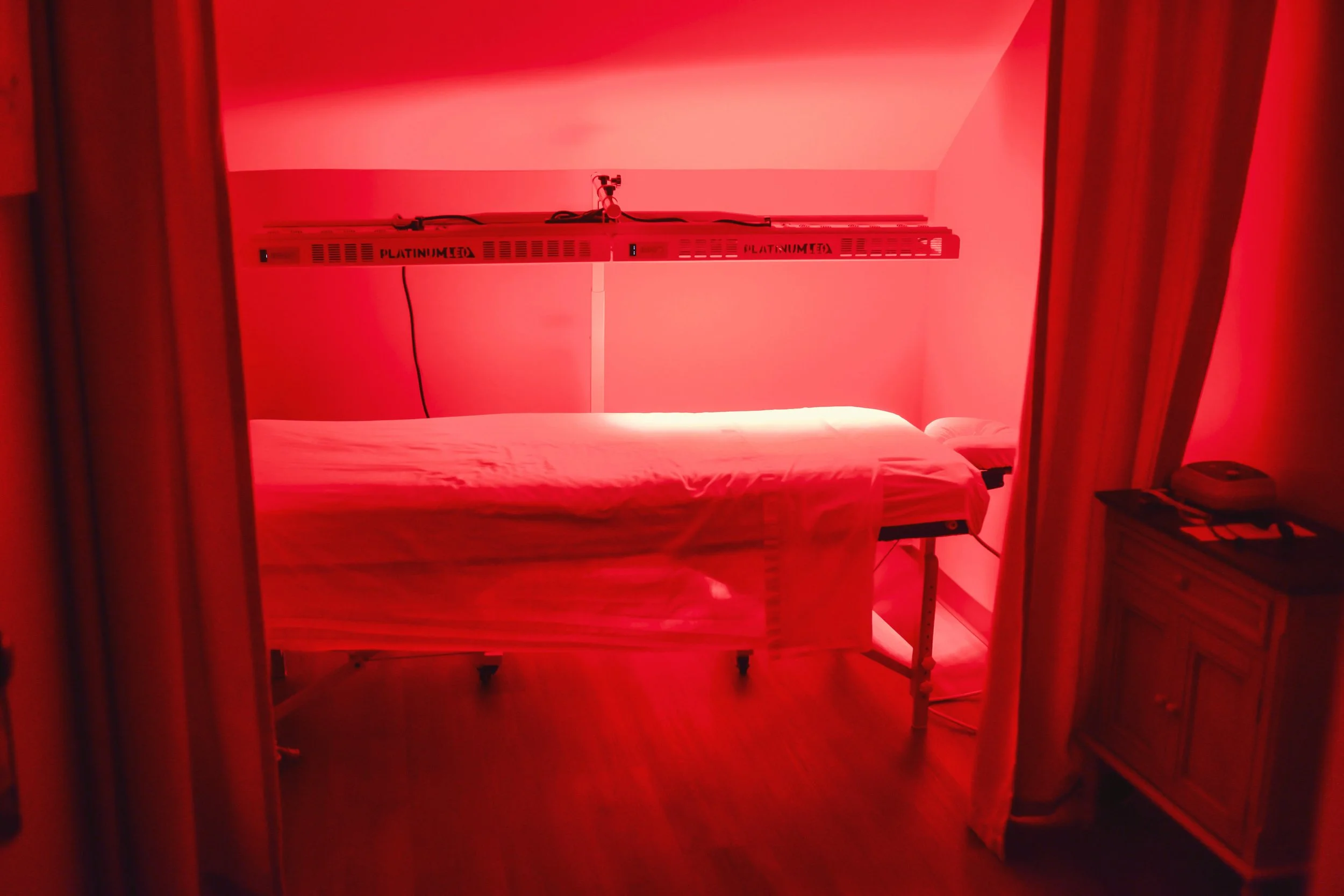
Our Platinum LED Biomax Pro panels are professional-grade devices used in clinical research and integrative health practices worldwide. You'll lie comfortably under large-format panels that deliver red and near-infrared wavelengths across multiple therapeutic bandwidths.
Sessions typically last 30 minutes. Protective eyewear is provided, and you're welcome to close your eyes and decompress while the light does its work. Most clients describe it as deeply relaxing, a gentle warmth with no discomfort, no UV exposure, and zero recovery time.
Want to go deeper? Pulsed electromagnetic field (PEMF) therapy is available as an add-on to your Platinum LED red light therapy session. PEMF supports the body's natural electromagnetic signaling and pairs naturally with red light for a combined cellular support experience. Ask your practitioner whether it makes sense for your goals.
-
Our Sunlighten mPulse Aspire sauna delivers a full-spectrum infrared experience, combining near, mid, and far infrared with red light therapy panels built right in. This is a longer, more immersive session that layers the deep benefits of infrared heat (circulation, relaxation, cardiovascular support, and detoxification) with the targeted cellular benefits of red light.
Sauna sessions are also 30 minutes long, though you’ll be seated rather than lying down. The sauna option is particularly popular with clients focused on recovery, detoxification, skin health, or those who simply want to get more done in a single visit.
What makes clinical red light therapy better than home devices?
Home red light panels and masks can be useful for occasional spot treatment. But there are a few important reasons why professional sessions tend to deliver more consistent, meaningful results:
Therapeutic Dosing
Effective red light therapy isn't just about having the right color of LED. It's about delivering the right energy density – measured in joules per square centimeter – at the correct distance from the skin. Many consumer devices are significantly underpowered or don't even disclose their actual output, making it nearly impossible to know whether you're hitting therapeutic doses.
Wavelength precision
Not all wavelengths are created equal! The most studied therapeutic windows are tightly clustered in the red range (around 630–660nm) and near-infrared (810–850nm). Our panels use multiple specific wavelengths within these proven ranges. Consumer LEDs often dilute their effectiveness by spreading the energy across less useful frequencies. They glow a pretty red, but they’re just not providing the benefits.
Full-Body Coverage
A handheld home device treats one small area at a time. Our full-body panel setup covers the entire body in a single session, delivering systemic cellular benefits rather than localized ones.
Expert Guidance
The right protocol depends on your goals, health history, and the specific results you're looking for. Rather than guessing at session frequency and duration, our experienced practitioners can help you build a red light therapy routine that integrates with the bigger picture of your wellness plan.

Ready to Recharge?
Red Light Therapy in Ann Arbor, MI

Red light therapy is one of the most thoroughly researched tools in holistic wellness – not because it's trendy, but because the science keeps getting more interesting.
Whether you're here to address a specific concern, sharpen your recovery, or simply give your body more of the cellular support it was designed to run on, professional red light therapy at the Ann Arbor Holistic Health Wellness Center & Longevity Spa is a great place to start.
Your sessions here aren't just a standalone treatment. Our practitioners understand how red light therapy fits into the full picture of your health, and we're here to help you make the most of every visit.
Red Light Therapy FAQs
Answers to Common Questions About Red Light Therapy
-
It depends on your goals. For general wellness and energy support, many clients enjoy one to two sessions per week as an ongoing practice. For targeted goals — like skin health, pain support, or recovery — a more structured protocol over several weeks tends to produce better results than occasional drop-in sessions. Your practitioner can help you find the right rhythm.
-
Completely relaxing. You'll notice warmth from the near-infrared wavelengths, but unlike a sauna, there's no significant heat. Most clients use the time to rest, meditate, or just mentally clock out for a few minutes. No pain, no UV, no downtime.
-
For LED panel sessions, the goal is to expose as much skin as possible so the light can penetrate effectively – you’ll have complete privacy during your sessions, and wearing minimal clothing is ideal. We'll provide protective eyewear, and you can adjust coverage to your comfort level. For sauna sessions, light clothing or a towel is standard.
-
Yes, for the vast majority of healthy adults. Red light therapy is non-ionizing, produces no UV radiation, and has an extensive safety record in both clinical and research settings. There are a small number of contraindications noted in the "Is Red Light Therapy Right for Me?" section above, but side effects at therapeutic doses are rare and minor.
-
Both deliver red light, but the experience and emphasis are different. The Sunlighten mPulse Aspire is a full-spectrum infrared sauna that also incorporates red light panels, so you get the benefits of deep infrared heat — cardiovascular support, circulation, and more intensive detoxification — layered with red light therapy. Platinum LED red light panel sessions are cooler, shorter, and more specifically focused on the targeted cellular benefits of red and near-infrared light. Many clients enjoy both depending on their goals, and your practitioner can help you decide what makes sense for you.
-
Absolutely. PEMF is available as a direct add-on to LED panel sessions and is a natural companion. Many clients also incorporate red light therapy into a broader wellness plan that includes acupuncture, colonics, functional nutrition coaching, or other clinic services. Our practitioners can help you design a protocol that supports your overall health goals, rather than using each service in isolation.
-
Some clients notice early wins after just a handful of sessions, including better sleep, reduced soreness, and a subtle improvement in skin tone. For structural changes like collagen remodeling or meaningful pain reduction, a consistent series of sessions over several weeks tends to produce more lasting results. Like most things in health, consistency matters more than any single session, and tracking how you feel over time gives you the clearest picture of what's working.
The information on this page is informed by published research, including guidelines from the American College of Physicians, the National Institutes of Health (NCCIH), and peer-reviewed studies indexed in PubMed. We review our content regularly to reflect current evidence.